


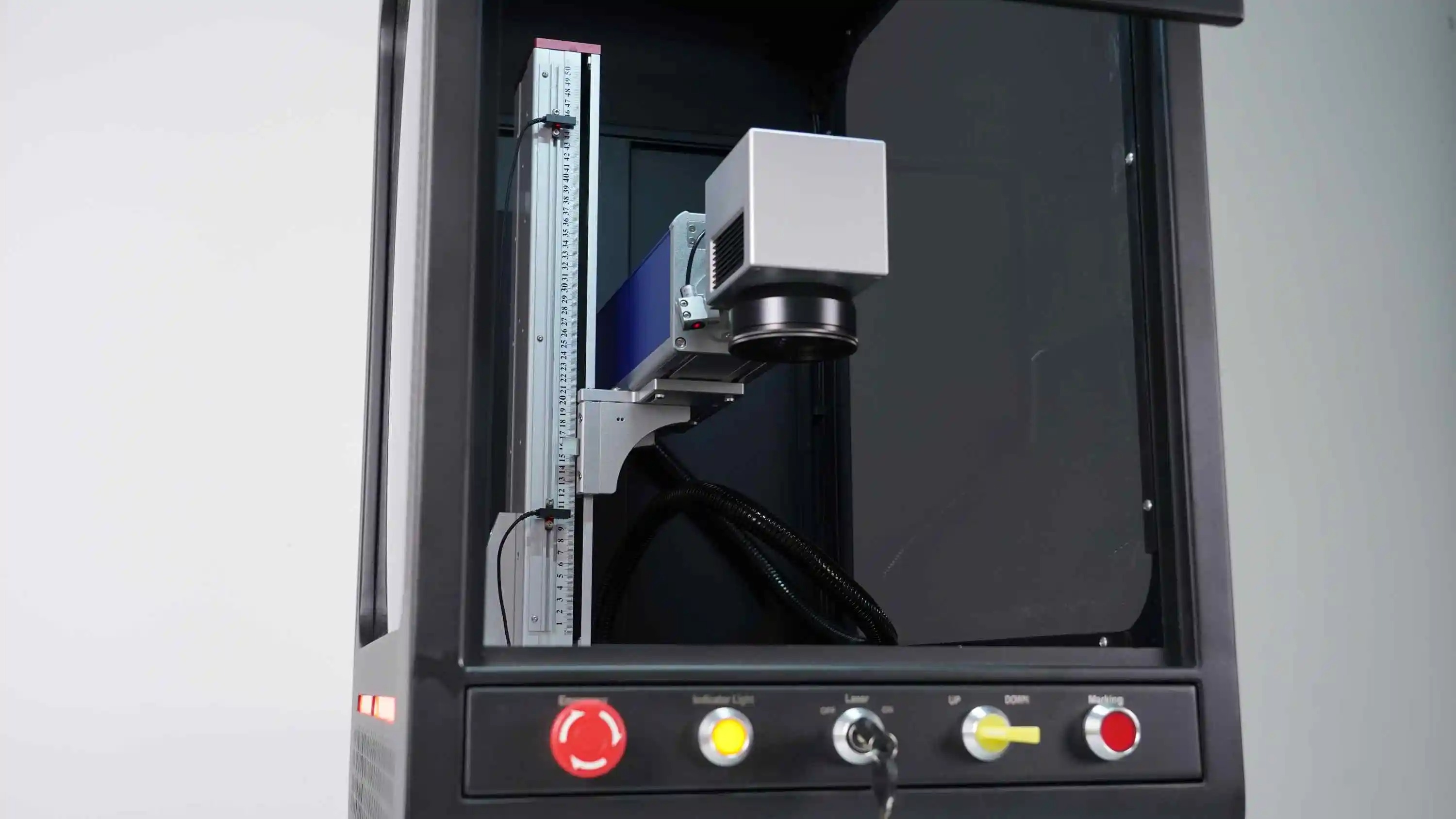
Production speed is one of the most critical factors when evaluating a laser engraving machine for metal. Industrial manufacturers and job shops need to understand what realistic throughput levels their metal marking technology can deliver. Whether you're processing stainless steel, aluminum, titanium, or brass components, the engraving speed directly impacts your production costs, labor efficiency, and overall profitability. Understanding the technical capabilities and practical limits of your equipment ensures informed purchasing decisions and optimized workflow planning.
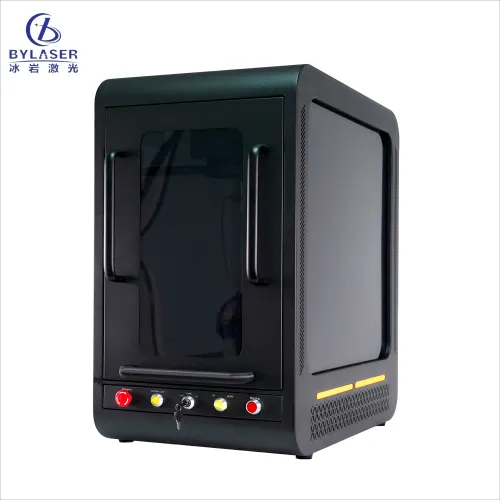
Fiber laser metal processing has revolutionized the precision metal engraving equipment market by delivering faster cycle times and superior marking quality compared to older technologies. Modern systems can mark metal surfaces at speeds ranging from moderate rates on complex designs to exceptionally high throughput on simple patterns. The actual production speed depends on material type, marking depth, design complexity, laser power output, and beam focus settings. Knowing these variables helps you set realistic expectations and choose equipment that matches your specific production demands.
Understanding Metal Marking Technology Speed Factors
Laser Power and Marking Depth Impact
Laser power output fundamentally determines how quickly metal marking technology can complete each piece. Higher wattage fiber laser metal processing systems can ablate metal surfaces faster because they deliver more energy density per unit of time. A 20-watt fiber laser engraver operates noticeably slower than a 50-watt or 100-watt system when marking the same material. Marking depth also affects speed significantly—shallow surface marks require seconds, while deep engraving into metal can take minutes depending on the design complexity and your precision metal engraving equipment specifications.
Material and Design Variables
Different metals respond differently to laser energy, influencing overall throughput. Aluminum and copper typically absorb laser energy efficiently, enabling faster marking speeds. Stainless steel and titanium often require slightly longer dwell times to achieve consistent, high-contrast marks. Complex designs with intricate details demand slower processing speeds to maintain edge definition and precision. Simple logos or text marks on the same material can be completed much faster, sometimes in just a few seconds. This variability means your metal marking technology's actual production speed will fluctuate based on job-to-job requirements.
Typical Production Speed Benchmarks
Speed Ranges for Common Applications
Modern fiber laser metal processing equipment typically achieves surface marking speeds between 1,000 to 4,000 millimeters per second, depending on system class and material. Entry-level precision metal engraving equipment in compact configurations can mark simple serial numbers or logos on stainless steel components in 3 to 8 seconds per piece. Industrial-grade laser engraving machines for metal can process batch orders of identical parts at rates exceeding 500 to 1,000 units per hour when designs are straightforward. Deep engraving applications requiring material removal of 0.5 millimeters or more will run slower, typically completing 50 to 300 pieces per hour depending on depth and material hardness.
Production Speed in Real-World Scenarios
A typical jewelry manufacturer using fiber laser metal processing might mark batch-numbered bracelets at 10 to 15 seconds per item, enabling 240 to 360 pieces daily from a single operator. Tool and die shops using precision metal engraving equipment for part identification achieve 30 to 60 seconds per complex multi-line mark. Medical device manufacturers processing titanium implants operate at conservative speeds of 2 to 5 minutes per component to ensure traceability compliance. Automotive suppliers performing VIN etching on engine blocks achieve 15 to 30 seconds per mark on large flat surfaces. Your metal marking technology's actual throughput will depend entirely on these contextual factors and your laser engraving machine for metal specifications.
Optimizing Speed Without Compromising Quality
Laser Parameters and Processing Settings
Experienced operators understand that maximum speed is not always the best strategy when using metal marking technology. Pulse frequency, scan speed, power percentage, and focal position all interact to determine both engraving speed and mark quality. Increasing scan velocity beyond optimal levels for your fiber laser metal processing system produces shallow, inconsistent marks. Conversely, reducing speed unnecessarily wastes production capacity. Precision metal engraving equipment requires careful calibration where operators test sample marks at different parameter combinations to establish the ideal speed-to-quality ratio for each material and design type.
Workflow and Fixturing Efficiency
Overall production speed extends beyond the laser engraving machine for metal itself. Material handling, part loading, fixturing, and unloading represent substantial portions of total cycle time. Batch-oriented operations using magnetic or pneumatic jigs can process parts rapidly through repetitive positioning. Fiber laser metal processing systems paired with automated part feeders achieve continuous operation without manual intervention. Your metal marking technology's true production efficiency depends on integrating the engraver with supporting workflow infrastructure, not just raw marking velocity. Organized workstations, clear tooling, and trained personnel can double effective throughput compared to poorly coordinated setups.
FAQ
How fast can fiber laser metal processing mark anodized aluminum?
Anodized aluminum responds excellently to fiber laser metal processing because the anodized coating absorbs laser energy very efficiently. Most precision metal engraving equipment can achieve marking speeds of 2,000 to 4,000 millimeters per second on anodized surfaces, translating to 2 to 5 seconds for typical logos or text. Deeper engraving through the anodized layer requires slower speeds, approximately 10 to 20 seconds for complete material removal depending on laser power and design complexity.
What speeds should I expect from a compact laser engraving machine for metal?
Compact laser engraving machines for metal with 20 to 30-watt power typically achieve marking speeds of 1,500 to 2,500 millimeters per second on simple designs. These metal marking technology systems are ideal for small to medium shops processing 100 to 500 pieces daily. Entry-level fiber laser metal processing units in this category complete basic part identification in 5 to 10 seconds per component, making them suitable for batch and made-to-order operations.
Does engraving depth affect production speed differently across metals?
Yes, engraving depth impacts speed differently depending on material type. On aluminum using precision metal engraving equipment, achieving 0.1 millimeter depth takes roughly 3 seconds at full power. Reaching 0.5 millimeter depth requires 10 to 15 seconds. Stainless steel engraving requires 20 to 40 percent longer for equivalent depths because fiber laser metal processing must overcome greater material density. Copper, brass, and anodized surfaces typically process faster than steel at identical depth requirements, making metal marking technology speed highly material-dependent.
