


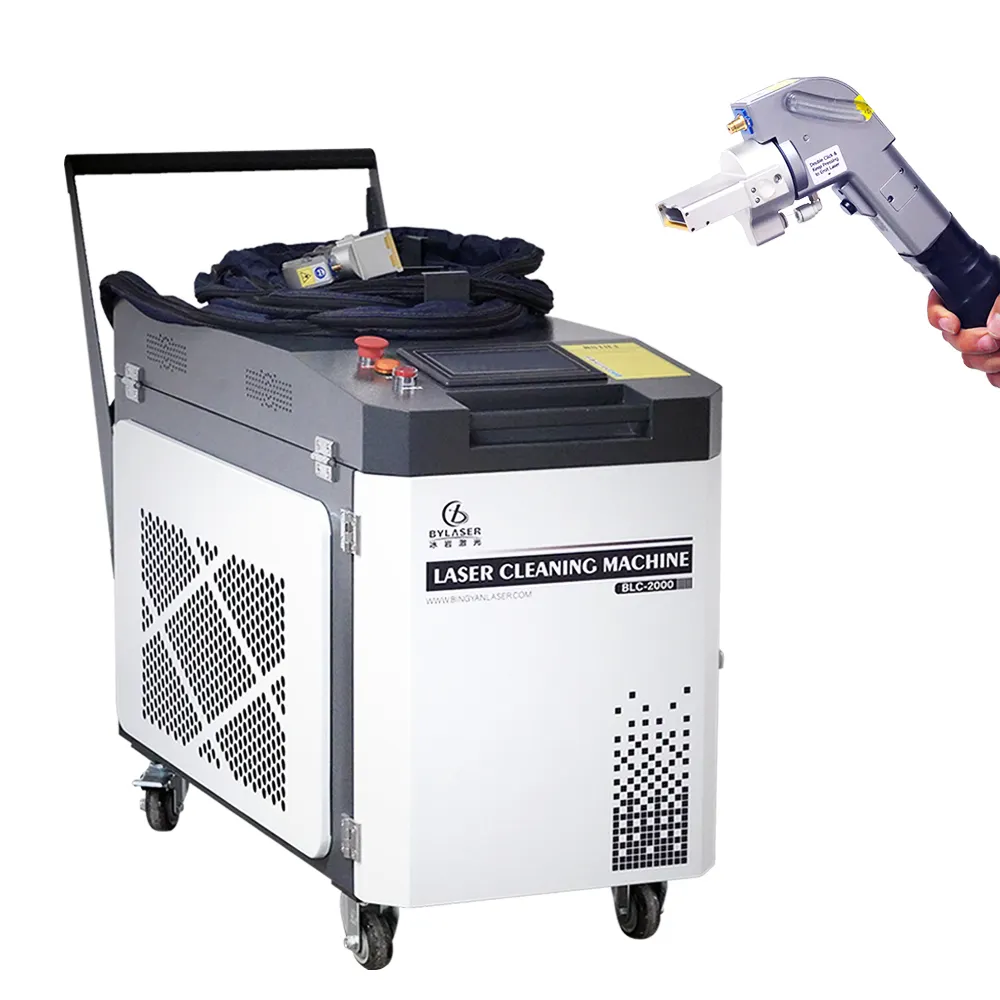
Understanding what drives laser cleaning machine price is essential for industrial buyers making long-term capital investments. The cost of these precision cleaning systems varies significantly based on technical specifications, power output, portability features, and intended application scope. Whether you operate in manufacturing, aerospace, automotive, or specialized maintenance sectors, grasping the pricing drivers behind laser cleaning equipment helps you evaluate total cost of ownership and select the right system for your operational needs.
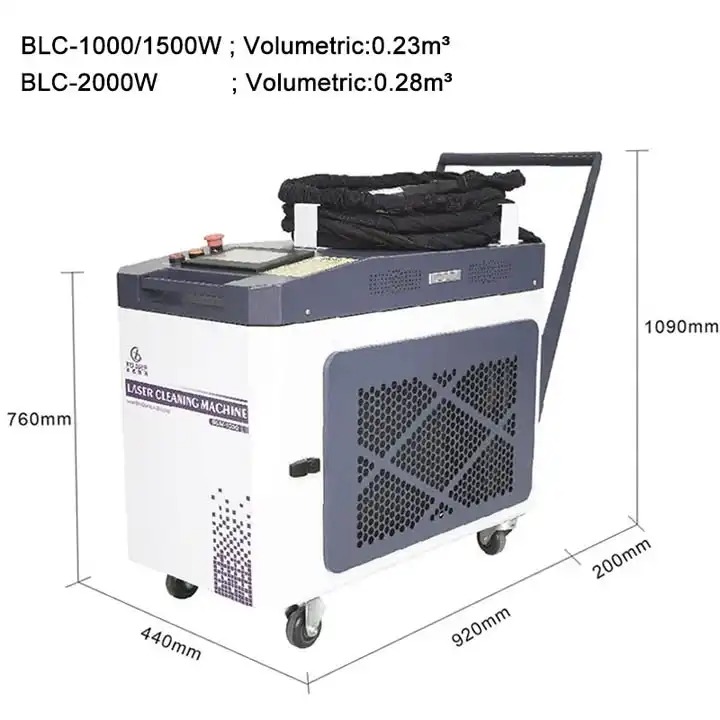
Industrial laser cleaner cost depends on multiple overlapping factors that directly impact both purchase price and operational efficiency. Fiber laser cleaning equipment rates reflect the underlying engineering complexity, component sourcing, and market positioning of manufacturers. Understanding these price determinants empowers you to negotiate effectively, compare vendor offerings accurately, and calculate realistic return on investment timelines for your facility.
Power Output and Laser Type Specifications
Wattage and Performance Capacity
Laser cleaning systems operate across a wide spectrum of power levels, typically ranging from 20 watts for delicate precision work to 500+ watts for heavy industrial oxide removal. Higher wattage directly correlates with faster cleaning speeds, deeper rust penetration, and ability to handle tougher substrate contamination. A portable laser rust removal pricing model reflects this reality—100-watt systems cost considerably less than 300-watt industrial-grade units because power output fundamentally determines processing throughput and material compatibility. The fiber laser cleaning equipment rates you encounter will scale proportionally with rated power, as higher-capacity laser tubes, advanced cooling systems, and reinforced optical components command premium pricing in manufacturing supply chains.
Laser Technology and Wavelength
Fiber lasers operate at 1064 nanometers wavelength and dominate the industrial laser cleaner cost landscape for metal substrate applications. Pulsed fiber technology generates superior absorption in steel, aluminum, copper, and titanium compared to continuous-wave alternatives. Portable laser rust removal pricing increases when systems feature pulse-width tunability and frequency modulation, because these capabilities enable operators to adapt cleaning parameters to specific oxide types and surface conditions without damaging underlying base material. Advanced wavelength engineering and beam-shaping optics that characterize premium fiber laser cleaning equipment rates reflect the research and development investment required to achieve consistent, repeatable, damage-free results across diverse industrial environments.
Portability, Mobility, and Form Factor
Desktop versus Field-Deployable Systems
Stationary laser cleaning machines integrated into production line stations typically occupy lower price tiers than equivalent portable laser rust removal pricing models designed for on-site maintenance and field deployment. Portability engineering—including integrated power management, lightweight but durable enclosures, weatherproof optical protection, and simplified focusing mechanisms—adds material costs and manufacturing complexity that propagate through industrial laser cleaner cost structures. Systems engineered for outdoor use, rough terrain navigation, and mobile mounting on vehicles or equipment carriers require ruggedized components, vibration-damping systems, and environmental sealing specifications that increase fiber laser cleaning equipment rates substantially compared to stationary laboratory configurations.
Integration and Control Interfaces
Portable laser rust removal pricing reflects control system sophistication and user interface accessibility. Manual systems with basic focal length adjustment cost considerably less than fully automated platforms featuring programmable scan patterns, real-time power modulation, and integrated cleaning cycle libraries. Fiber laser cleaning equipment rates climb significantly when manufacturers include touchscreen interfaces, wireless connectivity, remote diagnostic capabilities, and safety interlock systems that prevent accidental operator exposure. Industrial laser cleaner cost escalates further with systems offering software integration to facility management platforms, production tracking, and automated reporting—features that justify premium pricing through reduced operator training time and streamlined maintenance documentation.
Application Scope and Industry Positioning
Material Compatibility and Cleaning Range
General-purpose laser cleaning systems designed to work across broad material categories—steel, aluminum, titanium, composite substrates—command higher laser cleaning machine price points than specialized single-purpose equipment. Systems capable of removing oxide, rust, paint, epoxy, and contaminants across multiple thickness ranges and surface finishes require more sophisticated beam delivery optics, extended focal length capabilities, and flexible power regulation than narrowly focused alternatives. Portable laser rust removal pricing reflects this versatility; a machine designed exclusively for rust removal on steel carries lower industrial laser cleaner cost than a multi-application platform capable of precision coating removal, weld prep cleaning, and delicate substrate handling. Fiber laser cleaning equipment rates for multi-industry platforms embed the engineering overhead needed to achieve material-agnostic performance.
Duty Cycle and Production Volume Expectations
Low-volume intermittent-use systems engineered for occasional maintenance cleaning differ fundamentally in cost structure from high-cycle production equipment operating continuously throughout operational shifts. Industrial laser cleaner cost for heavy-duty systems incorporates industrial-grade thermal management, extended-life optical components, precision-engineered laser tube configurations, and power supply redundancy designed to sustain demanding workloads without performance degradation. Portable laser rust removal pricing for occasional field maintenance naturally falls below continuous-operation industrial platforms, reflecting reduced component durability requirements and simplified cooling architecture. Fiber laser cleaning equipment rates for production-line integration embed the engineering investment in reliability, predictability, and minimal downtime—factors that directly impact long-term operational cost savings despite higher initial purchase price.
Brand Positioning, Manufacturing Location, and Warranty Coverage
OEM Reputation and Market Tier
Established manufacturers with proven reliability records and extensive field deployment history command premium laser cleaning machine price relative to emerging competitors or generic equipment suppliers. Brand reputation directly influences industrial laser cleaner cost through warranty depth, technical support responsiveness, spare parts availability, and perceived long-term product viability. Portable laser rust removal pricing from recognized industrial equipment brands typically includes comprehensive documentation, application engineering consultation, and multi-year component warranties that generic suppliers cannot match. Fiber laser cleaning equipment rates reflect this market segmentation; premium-tier vendors justify elevated pricing through technical performance consistency, responsive customer support infrastructure, and transparent specification reliability.
Warranty Scope, Support Services, and Total Cost of Ownership
Comprehensive warranty packages significantly influence effective laser cleaning machine price when calculated across multi-year ownership timelines. Industrial laser cleaner cost estimates that focus solely on upfront purchase price underestimate true operational expense—extended warranties, preventive maintenance support, and expedited technical assistance embedded in premium pricing models reduce unplanned downtime and expensive field repairs. Portable laser rust removal pricing often includes operator training programs, application development support, and ongoing process optimization consultation that increase perceived value and justify premium rates. Fiber laser cleaning equipment rates incorporating 24/7 technical support, regional service centers, and readily available spare parts deliver cost efficiency that isn't immediately apparent in initial purchase price comparisons.
FAQ
How does portable laser rust removal pricing compare to stationary industrial systems?
Portable laser rust removal pricing generally falls into mid-tier ranges because field-deployable systems require ruggedized engineering, integrated power management, and weatherproof optical protection that add manufacturing cost. However, stationary production-line platforms can exceed portable pricing if they incorporate advanced automation, high-cycle thermal management, and extensive safety systems. The actual industrial laser cleaner cost depends more on intended duty cycle and application range than physical form factor alone.
What warranty and support factors most significantly impact fiber laser cleaning equipment rates?
Fiber laser cleaning equipment rates increase substantially when manufacturers include comprehensive component warranties, 24/7 technical support access, on-site preventive maintenance programs, and rapid spare parts availability. These support services justify premium laser cleaning machine price by minimizing unplanned downtime and reducing total cost of ownership across 5–7 year ownership cycles. Systems bundling application engineering consultation, operator training, and process optimization support typically command 15–25% price premiums relative to basic equipment-only offerings, yet deliver superior operational returns.
Does higher wattage always mean better value in industrial laser cleaner cost calculations?
Not necessarily. Higher-wattage systems increase laser cleaning machine price and energy consumption but don't always deliver better value for lighter-duty applications requiring precision and surface finish preservation. A 100-watt portable laser rust removal system may deliver superior cost-per-application economics and reduced operator training complexity compared to oversized 300-watt equipment for maintenance cleaning scenarios. Matching power specifications to actual application requirements—rather than selecting maximum capacity—optimizes fiber laser cleaning equipment rates relative to operational performance needs and facility infrastructure constraints.
