


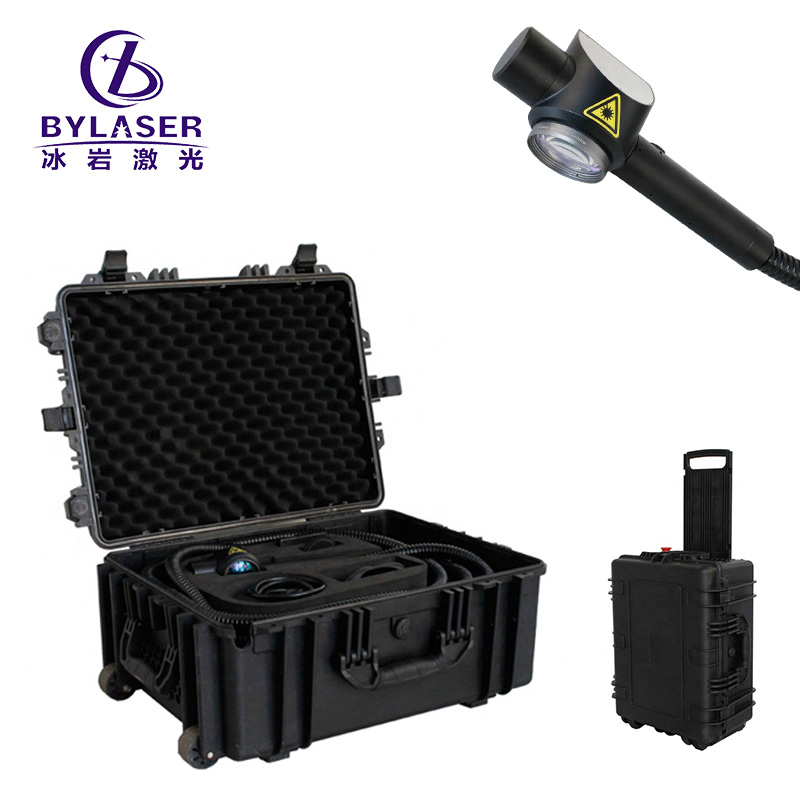
Rust removal has traditionally relied on abrasive methods, chemical treatments, and mechanical grinding that consume time, create waste, and pose safety risks. A pulse laser cleaning machine represents a transformative shift in industrial surface preparation, using advanced photonic energy to eliminate rust, corrosion, and contaminants without damaging underlying material. This technology has become indispensable across manufacturing, maintenance, restoration, and infrastructure sectors where precision and efficiency directly impact operational costs and production timelines.
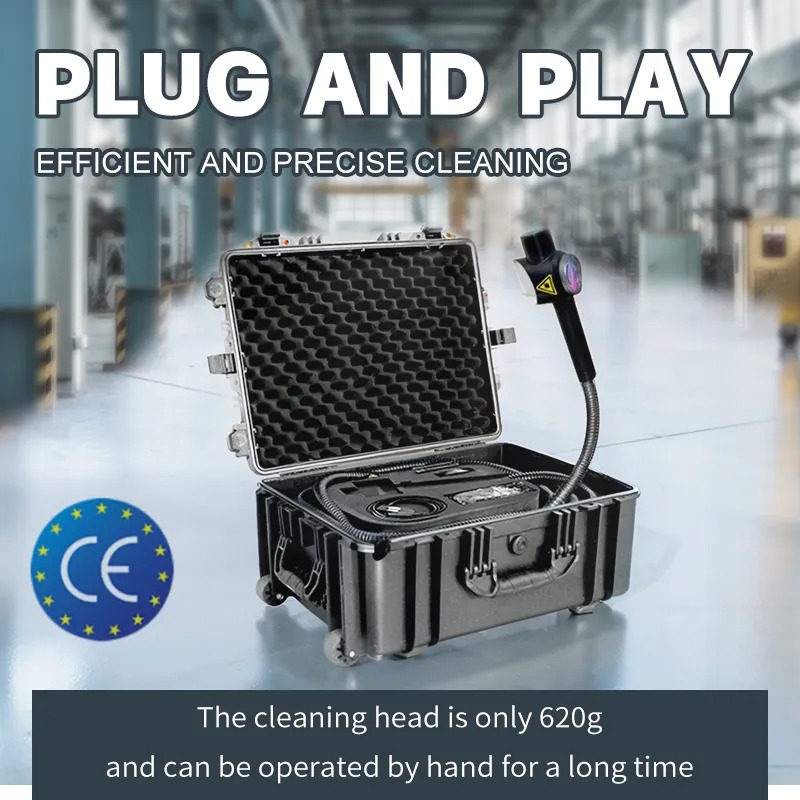
Understanding how pulse laser cleaning machines operate requires examining the fundamental physics of pulsed laser rust removal and the interaction between laser energy and oxide layers. Unlike passive cleaning solutions, these systems deliver controlled, high-intensity light pulses that target rust molecules while leaving substrate surfaces intact. The fiber laser surface cleaning approach combines wavelength precision, pulse duration control, and energy calibration to achieve selective material removal that traditional methods cannot replicate at scale or with minimal substrate wear.
The Physics Behind Pulsed Laser Rust Removal
How Laser Energy Targets Rust Formation
Rust forms as iron oxide crystals bond to steel surfaces through chemical oxidation. A pulsed laser rust removal system emits concentrated light energy at wavelengths specifically absorbed by oxide layers. When the laser pulse strikes rust particles, the photonic energy causes rapid thermal expansion within oxide structures. This expansion creates internal stress that exceeds the molecular adhesion between rust and substrate, causing oxide particles to ablate or vaporize. The pulse duration—typically measured in nanoseconds—ensures energy delivery is fast enough to remove contamination through photothermal and photochemical mechanisms without conducting excessive heat into the underlying material.
Wavelength and Pulse Frequency Selection
Fiber laser surface cleaning systems operate at near-infrared wavelengths, commonly around 1064 nanometers, which penetrate oxide layers effectively while reflecting from clean metal surfaces. This wavelength selectivity means the fiber laser surface cleaning process naturally stops removing material once rust is eliminated, preventing over-cleaning damage. Pulse frequency determines cleaning speed and intensity; industrial laser contamination removal applications typically use pulse rates between 20 and 100 kilohertz, allowing operators to balance cleaning thoroughness with processing time. Higher frequencies enable faster coverage, while lower frequencies deliver greater energy per pulse for heavily corroded or thick oxide buildup.
Industrial Applications and Rust Removal Mechanisms
Surface Preparation and Maintenance Workflows
Manufacturing facilities employ industrial laser contamination removal systems for pre-welding surface preparation, where even microscopic rust residue compromises weld quality and bond strength. The pulsed laser rust removal process removes mill scale, surface oxidation, and corrosion products that mechanical grinding would leave as subsurface defects. In maintenance environments, pulse laser cleaning machines restore equipment surfaces without disassembling components, reducing downtime significantly. Aerospace suppliers, automotive manufacturers, and heavy equipment producers rely on fiber laser surface cleaning to meet quality standards while maintaining production velocity. The non-contact nature of pulsed laser rust removal eliminates grinding dust and chemical runoff, addressing environmental and worker safety concerns simultaneously.
Contamination Types and Selective Removal
Industrial laser contamination removal excels at removing rust without affecting paint, coatings, or delicate underlying surfaces. A pulse laser cleaning machine can distinguish between oxide layers and substrate material based on reflectivity and thermal response. This selectivity enables technicians to clean intricate geometries, threaded fasteners, and precision-machined surfaces where traditional abrasive cleaning would cause dimensional drift or surface roughness. The fiber laser surface cleaning approach also removes grease, carbon deposits, and oxidation simultaneously during a single operation, consolidating multiple cleaning steps into one efficient workflow. Pulsed laser rust removal proves particularly valuable on cast iron, stainless steel, and aluminum where chemical cleaners risk surface etching or where mechanical methods create unacceptable material loss.
Operational Advantages and Cost-Benefit Dynamics
Efficiency and Material Preservation
Pulse laser cleaning machines operate without consumable media, coolants, or disposable grinding wheels, reducing operational costs substantially over time. Traditional rust removal methods consume resources with each application, generate hazardous waste requiring disposal, and necessitate personal protective equipment and ventilation infrastructure. Industrial laser contamination removal systems require minimal energy input relative to material removal rate and eliminate waste streams entirely. The pulsed laser rust removal process preserves material thickness and dimensional accuracy, extending component lifespan and enabling reuse of expensive parts that would otherwise require scrapping. For high-precision manufacturing where surface finish directly impacts product performance, fiber laser surface cleaning delivers reproducible, controlled results that mechanical abrasion cannot match.
Speed and Scalability Considerations
A pulse laser cleaning machine can clean square meters of heavily rusted surface in minutes, whereas equivalent grinding or chemical treatment requires substantially longer. The industrial laser contamination removal workflow scales efficiently across batch processing or continuous production lines; operators focus a single beam on moving components or translate the system across stationary surfaces. Fiber laser surface cleaning systems integrate with robotic automation, enabling unattended operation and consistent quality across high-volume production. Pulsed laser rust removal reduces labor requirements, minimizes rework from uneven cleaning, and compresses production cycles—factors that compound into significant cost advantages across years of operation. The flexibility of pulse laser cleaning machines allows facilities to adapt cleaning parameters for different materials, rust severity, and surface geometry without equipment reconfiguration.
FAQ
Does pulsed laser rust removal work on all metal types?
Industrial laser contamination removal performs effectively on ferrous metals, stainless steel, aluminum, copper, and titanium. Fiber laser surface cleaning achieves optimal results on electrically conductive materials where the laser energy dissipates efficiently and oxide adhesion varies from substrate bonding. Specialized fiber laser surface cleaning applications require parameter adjustment for different metals, but the pulsed laser rust removal principle remains applicable across a broad range of industrial materials and alloy compositions.
Is a pulse laser cleaning machine safe for operators?
Modern pulse laser cleaning machines incorporate safety interlocks, beam shielding, and enclosed work chambers that prevent accidental exposure to laser radiation. Operators require appropriate eye protection rated for the specific wavelength, and industrial laser contamination removal installations follow laser safety standards and workplace guidelines. Unlike grinding or chemical cleaning, pulsed laser rust removal eliminates hazardous dust inhalation and chemical exposure, making it substantially safer for routine operation when properly configured and maintained.
What is the maintenance requirement for pulse laser cleaning systems?
Pulse laser cleaning machines require periodic cleaning of optical components, inspection of cooling systems, and calibration verification to maintain consistent fiber laser surface cleaning performance. Industrial laser contamination removal systems do not consume wearing parts like grinding wheels or abrasive media, and pulsed laser rust removal creates no chemical waste streams. Routine maintenance typically involves lens cleaning and thermal management checks, representing a fraction of the maintenance burden associated with conventional surface preparation equipment.
