


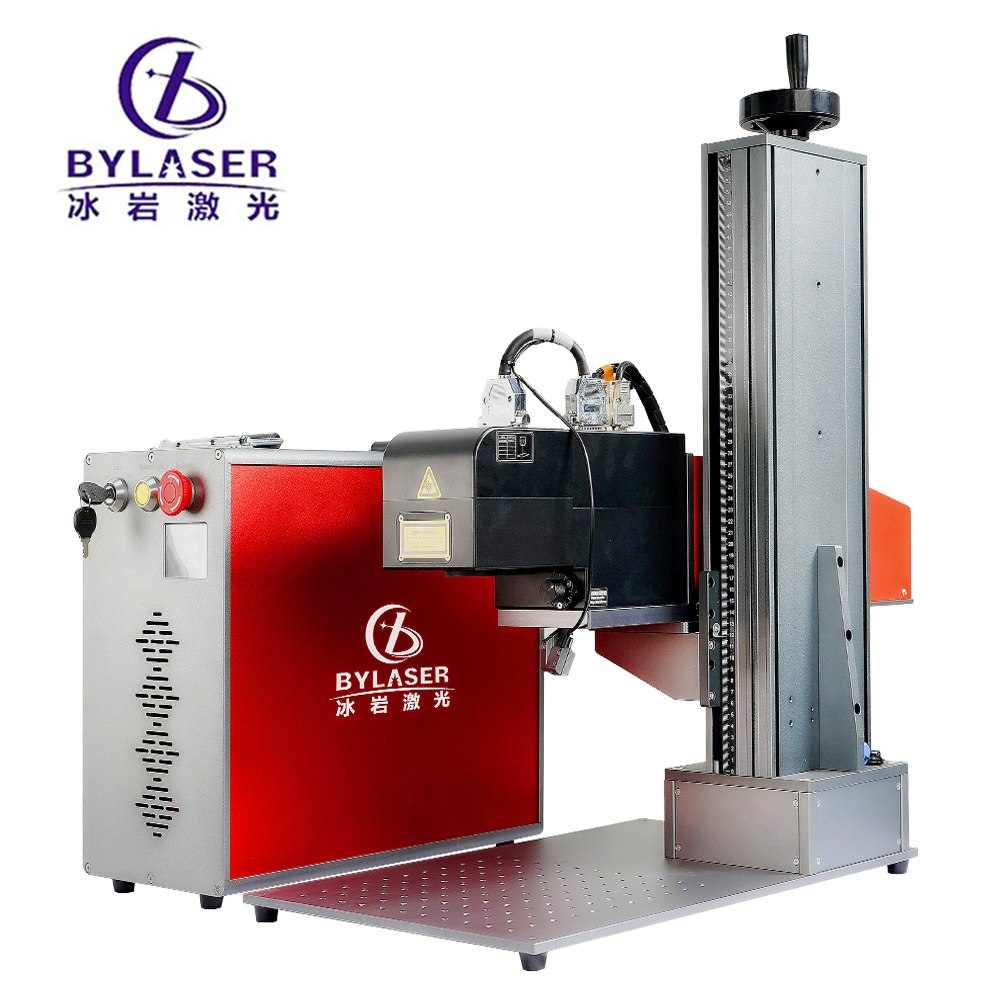
Precision is the cornerstone of modern industrial marking, and understanding what a fiber laser engraver can achieve across different surfaces is essential for manufacturers, service providers, and businesses seeking reliable identification solutions. The ability to deliver consistent, detailed marks on diverse materials directly impacts product quality, traceability, and brand integrity. A fiber laser engraver uses focused infrared light to vaporize or discolor material surfaces with exceptional accuracy, making it a critical tool for industries ranging from aerospace to jewelry production.
Precision capabilities vary significantly depending on surface material properties, laser power, wavelength, and system calibration. A fiber laser marking system can achieve line widths as fine as 0.05 millimeters on optimal surfaces, with depth control enabling everything from shallow surface marks to deep structural identification. Understanding these precision parameters helps operations managers and production engineers select the right technology and set realistic expectations for their specific marking applications.
Precision Levels on Metallic Surfaces
Steel and Stainless Steel Marking
Metals are among the most demanding and rewarding surfaces for laser engraving machine applications. Steel and stainless steel absorb infrared wavelengths efficiently, allowing the industrial laser engraving system to achieve extremely fine detail with minimal thermal distortion. On these surfaces, a fiber laser engraver can produce marks with line widths between 0.1 and 0.3 millimeters, and depth control allows marks ranging from surface annealing to cuts exceeding 1 millimeter deep.
The consistency of metal surfaces provides predictable results, making steel ideal for high-volume production environments. Barcode marks, serial numbers, and decorative patterns remain crisp and legible across entire production runs. Fiber laser marking on stainless steel produces a dark, permanent contrast without surface damage, coating, or material loss that compromises part functionality. This reliability makes metallic surfaces the reference standard for assessing fiber laser precision capabilities.
Aluminum and Copper Alloys
Aluminum and copper present unique challenges because their high reflectivity and thermal conductivity demand precise power and speed calibration. An fiber laser engraver achieves excellent precision on these materials when operators account for material-specific heat dissipation. Aluminum typically requires slightly higher power settings to break through surface oxidation, while the laser engraving machine compensates by reducing processing speed to prevent thermal blur. On properly calibrated systems, line widths as fine as 0.15 millimeters remain achievable, with consistent depth control enabling micro-marking applications in aerospace and electronics sectors.
Copper alloys respond well to laser marking, though their reflectivity demands careful focus calibration. The industrial laser engraving achieves superior precision when wavelength-specific parameters are optimized, allowing detailed component identification without metallurgical damage. These materials benefit significantly from fiber laser marking technology because the process maintains material integrity while delivering permanent, high-contrast identification marks.
Precision on Nonmetallic Materials
Ceramics and Glass Surfaces
Ceramics and glass represent contrasting precision challenges within the nonmetallic category. Ceramics absorb infrared energy effectively, allowing the fiber laser engraving machine to achieve crisp, detailed marks with minimal thermal stress. Fine line widths between 0.2 and 0.5 millimeters remain consistent across ceramic surfaces, making this material popular in electronics, automotive, and medical device marking applications. The laser engraving machine's precision on ceramics extends to complex patterns, logos, and microdot matrices used for component identification.
Glass presents greater difficulty because its transparency to infrared wavelengths and brittle nature limit mark contrast and require thermal stress management. While a fiber laser marking system can engrave glass, precision suffers compared to opaque ceramics. Marks typically appear as surface cracks or subsurface fractures rather than clean lines, making fine-detail applications less practical. However, when industrial laser engraving parameters are carefully controlled, consistent marking remains achievable for identification and decorative purposes.
Plastics and Polymers
Plastics introduce thermal sensitivity that directly impacts laser engraving machine precision. Some polymers like polyimide and certain nylons respond well to fiber laser marking, producing clean marks without excessive melting or discoloration. Line widths of 0.2 to 0.8 millimeters are typical, with depth control allowing surface scoring without structural compromise. The fiber laser engraver must operate at lower power levels on heat-sensitive plastics to prevent material degradation, and this constraint naturally limits the finest achievable line widths compared to metal marking.
Other plastics like polycarbonate and acrylic present challenges because excessive heating causes material deformation or discoloration around marked areas. Operators using the laser engraving machine must balance marking visibility with material integrity, often accepting slightly coarser precision to preserve part functionality. Despite these limitations, modern fiber laser marking technology continues to expand the polymer range suitable for industrial engraving applications, particularly in consumer electronics and medical device sectors.
Practical Precision Factors and Surface Optimization
Surface Finish and Material Condition
Material surface condition dramatically influences what a fiber laser engraver can achieve in terms of precision. Smooth, uniform surfaces allow the laser engraving machine to maintain consistent focus and energy transfer, producing crisp marks with minimal tolerance variation. Oxidized or corroded metal surfaces, rough castings, or textured polymers reduce marking consistency because surface irregularities scatter laser energy. Operators often improve fiber laser marking precision by performing light surface preparation, such as degreasing or gentle abrasive finishing, before marking critical components.
The industrial laser engraving system performs optimally when material surfaces fall within the acceptable reflectivity, thermal conductivity, and surface roughness parameters for each material class. Manufacturers must verify that incoming material meets these specifications to ensure the fiber laser engraver delivers design-specification precision. This quality consistency requirement has driven adoption of controlled material sourcing and incoming inspection protocols in precision manufacturing environments.
Laser System Calibration and Maintenance
System precision depends fundamentally on optical alignment, power stability, and scanning head calibration. A well-maintained fiber laser engraving machine delivers consistent results within design specifications, while drift in laser power, focus optics, or scan deflection reduces achievable precision. Regular calibration using precision reference materials ensures the laser engraving machine continues meeting tolerance requirements across production runs. Preventive maintenance of lens cleanliness, cooling systems, and beam path alignment directly sustains the fiber laser marking capability that customers rely upon.
Industrial operations that prioritize system maintenance achieve superior precision stability compared to facilities that defer maintenance or rely on reactive repair. The fiber laser engraver's precision advantage over competing technologies only materializes when systems receive proper care and operators understand material-specific parameter optimization. This operational excellence requirement represents a significant factor in total cost of ownership and long-term marking capability sustainability.
FAQ
What is the finest line width a fiber laser engraver can produce?
The finest line width achievable depends on material type and system configuration. On optimal metallic surfaces, a fiber laser marking system can produce lines as fine as 0.05 to 0.1 millimeters. On more challenging materials like plastics or rough surfaces, minimum line widths typically range from 0.2 to 0.5 millimeters. The laser engraving machine's optical resolution, focal lens quality, and power stability all influence the achievable line width limit.
Can fiber laser marking achieve consistent precision across different material batches?
Yes, but consistency requires material specification control and system calibration discipline. Provided incoming materials maintain consistent surface properties, reflectivity, and thermal characteristics, the industrial laser engraving system delivers repeatable precision. Significant variation in material properties between batches necessitates parameter adjustment, but the fiber laser engraver's capability remains fundamentally stable when operators maintain awareness of material condition and perform routine system calibration verification.
How does depth precision compare across surface materials for laser engraving machines?
Depth precision varies considerably by material. On metals, the fiber laser marking system achieves exceptional depth control, enabling marks from 0.01 millimeters of surface annealing to multiple millimeter cuts. On ceramics, depth control remains good for surface marking applications. On thermally sensitive plastics, depth control is more limited because excessive laser energy causes uncontrolled material melting. The laser engraving machine operator must adjust expectations and parameters based on the specific material's thermal response characteristics.
