×
×
Modern manufacturing demands precision marking solutions that deliver consistent, permanent identification across diverse materials and production environments. A fiber laser marking machine has emerged as the gold standard for industries where accuracy is non-negotiable, offering micron-level precision that traditional marking methods simply cannot match. From medical device traceability to aerospace component identification, these advanced systems provide the exactness required for critical applications where even minor marking variations can compromise product integrity, regulatory compliance, or operational safety.
Understanding which applications specifically require the precision capabilities of a fiber laser marking machine helps manufacturers make informed investment decisions and optimize their marking processes. The decision to deploy fiber laser technology goes beyond simple part identification—it addresses fundamental business requirements including regulatory traceability, counterfeit prevention, quality assurance documentation, and permanent product authentication. This article examines the specific industrial applications where fiber laser marking accuracy becomes essential rather than optional, exploring the technical requirements that make these systems indispensable in precision-critical manufacturing environments.
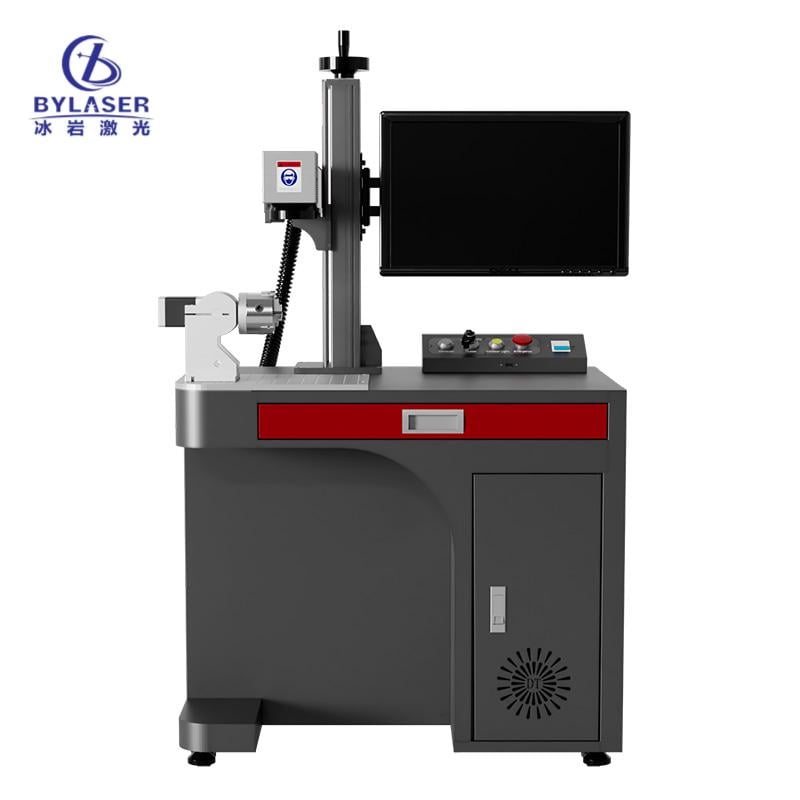
Medical device manufacturers face stringent regulatory requirements for permanent marking under the FDA's Unique Device Identification system and similar global standards. A fiber laser marking machine provides the precision necessary to create high-contrast, biocompatible markings on surgical instruments, implantable devices, and diagnostic equipment without compromising material integrity. The non-contact marking process ensures that critical medical components maintain their sterile properties while receiving permanent identification codes that survive repeated sterilization cycles, chemical exposure, and decades of clinical use.
Surgical instruments manufactured from stainless steel, titanium, and specialized medical alloys require marking solutions that penetrate surface layers without creating stress points or contamination risks. The focused beam energy of a fiber laser marking machine creates marks through controlled material vaporization or oxidation, producing identification codes with character heights as small as 0.3 millimeters while maintaining perfect readability. This precision becomes essential when marking small components like orthopedic screws, dental implants, or laparoscopic tool tips where available marking space measures just a few square millimeters.
Implantable medical devices including pacemakers, artificial joints, spinal implants, and cardiovascular stents demand absolute marking accuracy for patient safety and regulatory traceability. These products require permanent identification that remains legible throughout the device's implanted lifespan, which may extend twenty years or longer within the human body. A fiber laser marking machine delivers the material compatibility and marking permanence necessary for this critical application, creating identification marks that withstand continuous exposure to bodily fluids, immune system responses, and mechanical stress from normal physiological movement.
The precision requirements for implantable device marking extend beyond simple legibility—marks must be created without generating particulate contamination, altering surface chemistry, or introducing microscopic cracks that could serve as bacterial colonization sites. Fiber laser systems achieve this through controlled energy delivery that modifies only the immediate surface layer, creating high-contrast identification without compromising the biocompatible coatings or bulk material properties essential for long-term implant success. This level of process control makes the fiber laser marking machine the preferred technology for manufacturers pursuing ISO 13485 certification and FDA approval.
Pharmaceutical companies deploy fiber laser marking systems to combat counterfeit medications and ensure supply chain integrity through serialized packaging identification. The technology enables permanent marking of lot numbers, expiration dates, and unique serial codes directly onto blister packs, bottles, ampoules, and primary packaging materials without chemical inks or consumables. A fiber laser marking machine creates these marks at production speeds exceeding 600 units per minute while maintaining perfect code readability for automated verification systems throughout the distribution chain.
The accuracy of pharmaceutical marking directly impacts patient safety and regulatory compliance under serialization mandates like the Drug Supply Chain Security Act and the European Falsified Medicines Directive. Marking errors or illegible codes can trigger costly production shutdowns, product recalls, or supply chain disruptions. Fiber laser systems eliminate these risks through digital mark verification, automatic code validation, and integrated quality control that confirms every mark meets specification before products leave the manufacturing line.
Aerospace manufacturers operate under some of the most demanding marking requirements in industrial production, where component traceability directly connects to flight safety and accident investigation capabilities. Aircraft engine components, landing gear assemblies, hydraulic system parts, and flight control mechanisms require permanent identification that survives extreme temperature cycling, vibration exposure, hydraulic fluid contact, and decades of operational service. A fiber laser marking machine provides the marking durability and precision necessary to meet aerospace industry specifications including AMS-STD-2319 and SAE AS9100 requirements for permanent part identification.
The materials used in aerospace applications—titanium alloys, nickel superalloys, aluminum aerospace grades, and advanced composites—present unique marking challenges that demand the focused energy delivery and wavelength characteristics of fiber laser systems. These materials require precise energy parameters to create high-contrast marks without inducing thermal stress, microstructural changes, or surface conditions that could initiate fatigue crack formation. A fiber laser marking machine delivers the process stability necessary to mark thousands of components with identical appearance and depth characteristics, ensuring consistent readability across entire production runs.
Jet engine turbine blades represent one of the most demanding applications for precision marking technology, combining small available marking areas with extreme service conditions and critical safety requirements. Each blade requires individual identification for tracking through manufacturing, assembly, maintenance intervals, and eventual retirement. The curved surfaces and thin cross-sections of turbine blades demand marking systems capable of maintaining focus accuracy across complex geometries while depositing minimal thermal energy to avoid metallurgical damage. Fiber laser marking machines accomplish this through rapid pulsing that delivers energy in nanosecond bursts, creating permanent marks without heat-affected zones or dimensional distortion.
Engine manufacturers utilize serialized marking data to track component lifecycles, predict maintenance requirements, and investigate performance anomalies across fleets of aircraft. This tracking system depends on marking permanence that survives combustion temperatures exceeding 1500 degrees Celsius, centrifugal forces approaching 100,000 RPM, and erosive exposure to high-velocity combustion gases carrying particulate contaminants. The depth and contrast characteristics achievable with a fiber laser marking machine ensure that identification codes remain readable throughout multiple overhaul cycles and the complete operational life of the engine.
Advanced composite materials increasingly replace traditional metals in aerospace structures, offering superior strength-to-weight ratios but presenting unique marking challenges. Carbon fiber reinforced polymers and other composite materials require marking approaches that create visible identification without damaging the resin matrix, exposing reinforcing fibers, or creating delamination initiation points. A fiber laser marking machine addresses these challenges through wavelength selection and pulse parameter control that targets the resin surface layer while leaving structural fibers intact, producing permanent marks that meet aerospace inspection standards without compromising material performance.
The precision control available with fiber laser systems enables aerospace manufacturers to create identification marks on composite components that pass ultrasonic inspection and meet fatigue life requirements identical to unmarked material. This capability proves essential for structural components including wing panels, fuselage sections, and control surfaces where any marking-induced defect could propagate under cyclic loading and ultimately compromise aircraft safety. The digital process control of modern fiber laser marking machines ensures that every composite component receives identical marking parameters, eliminating operator variability and process drift that could affect mark quality.
Semiconductor manufacturers require marking solutions capable of creating readable identification on silicon dies, ceramic packages, and miniature electronic components measuring just millimeters across. A fiber laser marking machine delivers the beam spot size and positioning accuracy necessary to mark QR codes, alphanumeric data, and logo graphics on these microscopic surfaces without damaging delicate bond wires, active circuitry, or hermetic seals. The technology enables marking of individual chips during wafer-level processing or after packaging, supporting traceability requirements throughout electronics supply chains where counterfeit components represent significant quality and security risks.
The precision demands of semiconductor marking extend beyond simple dimensional accuracy—marks must be created without generating electrostatic discharge, introducing ionic contamination, or creating particulates that could compromise device reliability. Fiber laser systems accomplish this through non-contact processing in controlled environments, creating marks through localized surface modification rather than mechanical abrasion or chemical application. A fiber laser marking machine configured for semiconductor applications typically achieves positioning repeatability within five microns, ensuring that serial numbers and data matrix codes remain readable under microscopic inspection while maintaining proper clearance from sensitive circuit elements.
Electronics manufacturers mark printed circuit boards with production dates, revision codes, serial numbers, and quality certification data to enable field failure analysis and warranty management. These marks must survive wave soldering, reflow processes, conformal coating application, and years of operational thermal cycling without fading or becoming illegible. A fiber laser marking machine creates permanent identification on PCB substrates including FR-4 fiberglass, flexible polyimide films, and ceramic substrates by inducing controlled color changes or surface ablation that withstands subsequent manufacturing processes and end-use environmental exposure.
The accuracy requirements for PCB marking include precise placement relative to board features, consistent mark contrast for automated optical inspection, and controlled mark depth to avoid damaging embedded traces or components. Modern fiber laser marking systems integrate machine vision for automatic board registration, ensuring that identification codes appear in designated locations regardless of board warpage or fixture positioning variations. This integration capability allows electronics manufacturers to maintain marking accuracy across high-mix production environments where board designs change frequently and marking locations vary between product families.
Electronic connectors, cable assemblies, and wiring harnesses require permanent marking that communicates configuration details, quality certifications, and assembly sequence information without compromising electrical performance or mechanical fit. These components often feature complex three-dimensional geometries, metallic and plastic material combinations, and restricted marking surfaces that challenge traditional identification methods. A fiber laser marking machine addresses these challenges through rotary axis integration and dynamic focus control that maintains marking quality across curved connector shells, cylindrical cable jackets, and stepped housing profiles.
Defense and aerospace electronics applications particularly demand marking accuracy for connector identification, where mismatched assemblies could cause system failures with catastrophic consequences. Fiber laser systems create permanent, tamper-evident marks on connector bodies that survive mechanical mating cycles, environmental seal testing, and exposure to fuels, hydraulic fluids, and cleaning solvents encountered during aircraft or vehicle maintenance. The precision and permanence of marks produced by a fiber laser marking machine enable technicians to verify correct assembly configurations during installation and maintenance procedures, reducing human error risks in complex electronic systems.
Automotive safety systems including airbag inflators, seatbelt pretensioners, and crash sensors require absolute traceability for recall management and product liability defense. These life-safety components demand marking solutions that create permanent identification capable of surviving vehicle accidents, fire exposure, and years of underhood environmental exposure. A fiber laser marking machine provides the marking durability necessary for this application, creating identification codes through material removal or oxidation that remains readable even after components deploy during crash events or endure post-accident investigation procedures.
The precision requirements for safety component marking reflect both regulatory mandates and manufacturer quality systems that track every component from raw material through final vehicle assembly. Automotive suppliers utilize serialized marking data to manage supplier quality, coordinate recall campaigns, and defend against liability claims by documenting component manufacturing dates and process parameters. Fiber laser systems deliver the marking consistency and data integrity necessary to support these quality management systems, creating machine-readable codes that integrate with automated assembly verification and vehicle build records.
Engine blocks, cylinder heads, crankshafts, and transmission housings require permanent identification that survives casting processes, machining operations, heat treatment cycles, and decades of operational service under demanding thermal and mechanical conditions. A fiber laser marking machine creates deep, high-contrast marks on these cast iron and aluminum components without introducing stress risers or affecting fatigue properties critical to powertrain durability. The technology enables direct part marking of VIN derivatives, manufacturing dates, and quality certification codes that remain readable throughout vehicle service life and eventual recycling processes.
Automotive manufacturers increasingly adopt serialized component tracking to enable predictive maintenance, warranty fraud prevention, and supply chain optimization throughout global production networks. This serialization strategy depends on marking technologies that deliver consistent code quality across millions of components produced in multiple facilities worldwide. The digital process control and automated parameter management available with modern fiber laser marking machines ensure that powertrain components marked in different factories maintain identical mark characteristics, supporting global quality standards and enabling centralized traceability databases that span entire corporate manufacturing footprints.
Brake calipers, master cylinders, ABS modulators, and other braking system components require permanent marking for safety certification and recall management. These components experience extreme operating conditions including repeated thermal cycling, hydraulic fluid exposure, road salt corrosion, and mechanical vibration that eliminate marks created through ink printing or adhesive labels. A fiber laser marking machine produces identification codes that become integral to the component surface, surviving these harsh conditions while maintaining the readability necessary for service technicians, inspectors, and accident investigators to identify specific component populations during safety campaigns or failure analysis.
The accuracy demands of brake component marking reflect regulatory requirements and manufacturer liability concerns that mandate complete traceability from raw material certification through final vehicle assembly. Automotive tier-one suppliers implement marking systems capable of creating unique serial numbers at production rates matching automated assembly lines while maintaining perfect code readability for downstream verification. Fiber laser technology delivers this combination of speed and accuracy, marking components at rates exceeding one part per second while achieving mark quality that passes automated optical verification without operator intervention or rework requirements.
Manufacturers of cutting tools, end mills, drill bits, and precision machining inserts require marking solutions that identify products without affecting cutting performance or dimensional accuracy. These tools feature hardened surfaces, complex geometries, and tight dimensional tolerances that restrict marking options to technologies capable of creating identification without inducing surface stress or dimensional changes. A fiber laser marking machine addresses these requirements through controlled energy delivery that marks tool surfaces without affecting substrate hardness, edge geometry, or coating adhesion properties critical to cutting tool performance and service life.
Tool manufacturers utilize permanent marking for brand identification, size specification, material grade designation, and inventory tracking throughout distribution channels. The marking must withstand the abrasive conditions, thermal cycling, and chemical exposure encountered during cutting operations while remaining legible for tool selection and inventory management. Fiber laser systems create marks through surface oxidation or micro-texturing that survives these operating conditions without the wear characteristics associated with ink markings or mechanical engraving that create stress concentration points. The precision of a fiber laser marking machine ensures that identification codes appear in designated locations that avoid cutting edges and maintain proper tool balance for high-speed machining operations.
Measurement instruments including micrometers, calipers, gauge blocks, and inspection fixtures require permanent calibration markings that document certification dates, accuracy grades, and traceability to national measurement standards. These precision instruments often feature graduated scales, polished surfaces, and dimensional accuracy measured in microns—characteristics that demand marking technologies capable of adding identification without affecting measurement accuracy or surface finish. A fiber laser marking machine creates calibration marks through controlled surface modification that maintains instrument accuracy while providing permanent documentation of certification status and calibration intervals.
Metrology laboratories and quality assurance facilities depend on permanent instrument marking to maintain ISO 17025 accreditation and ensure measurement traceability throughout calibration cycles. The marks must survive years of handling, cleaning with solvents, and storage in controlled environments while maintaining perfect legibility for certification verification. Fiber laser technology delivers marking permanence that meets these requirements without the consumable costs or environmental concerns associated with chemical etching or ink marking approaches. The digital control capabilities of modern fiber laser marking machines enable creation of complex certification marks including two-dimensional barcodes that encode complete calibration histories and uncertainty specifications.
Injection molds, stamping dies, and forming tools require permanent identification for inventory management, maintenance scheduling, and quality traceability linking molded parts to specific cavity origins. These tools undergo repeated thermal cycling, high-pressure operations, and regular maintenance that eliminates temporary markings while the tool surface characteristics directly affect final part quality. A fiber laser marking machine creates permanent identification on mold surfaces without affecting cavity dimensions, surface finish, or parting line geometry that control molded part quality and production efficiency.
Mold manufacturers utilize serialized component marking to track individual cavity performance, coordinate preventive maintenance, and document tool modifications throughout service life. The marking locations must avoid part contact surfaces while remaining accessible for identification during tool changes and maintenance procedures. Fiber laser systems provide the marking flexibility necessary to address these requirements, creating identification codes on mold bases, lifter plates, and non-critical surfaces using parameters that control mark depth and prevent stress concentration in these hardened tool steels. The precision and process repeatability of a fiber laser marking machine ensures consistent mark quality across multiple tools in progressive die sets or family molds where cavity identification becomes essential for quality management and production optimization.
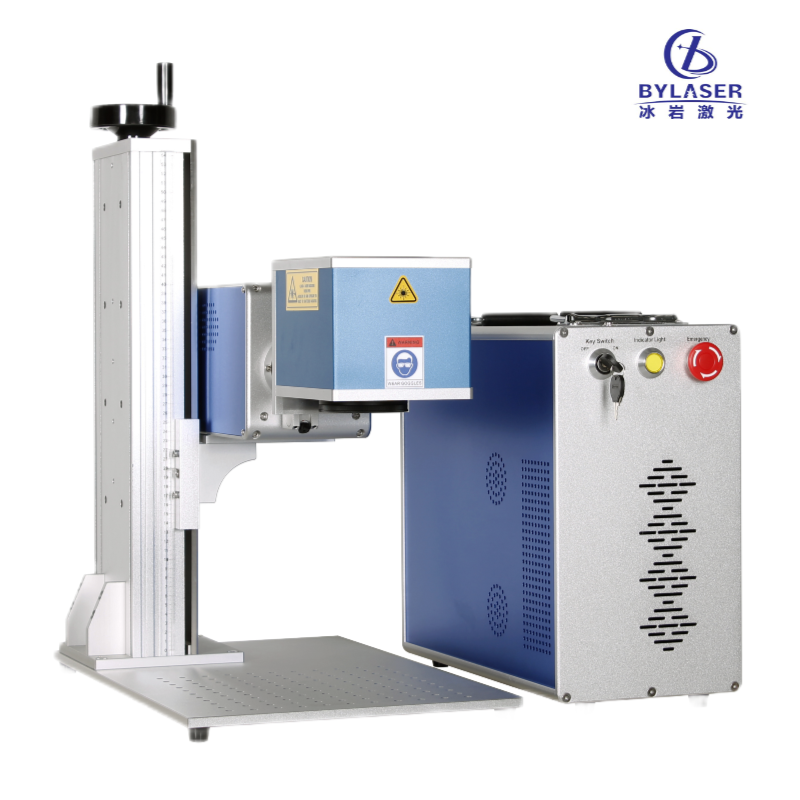
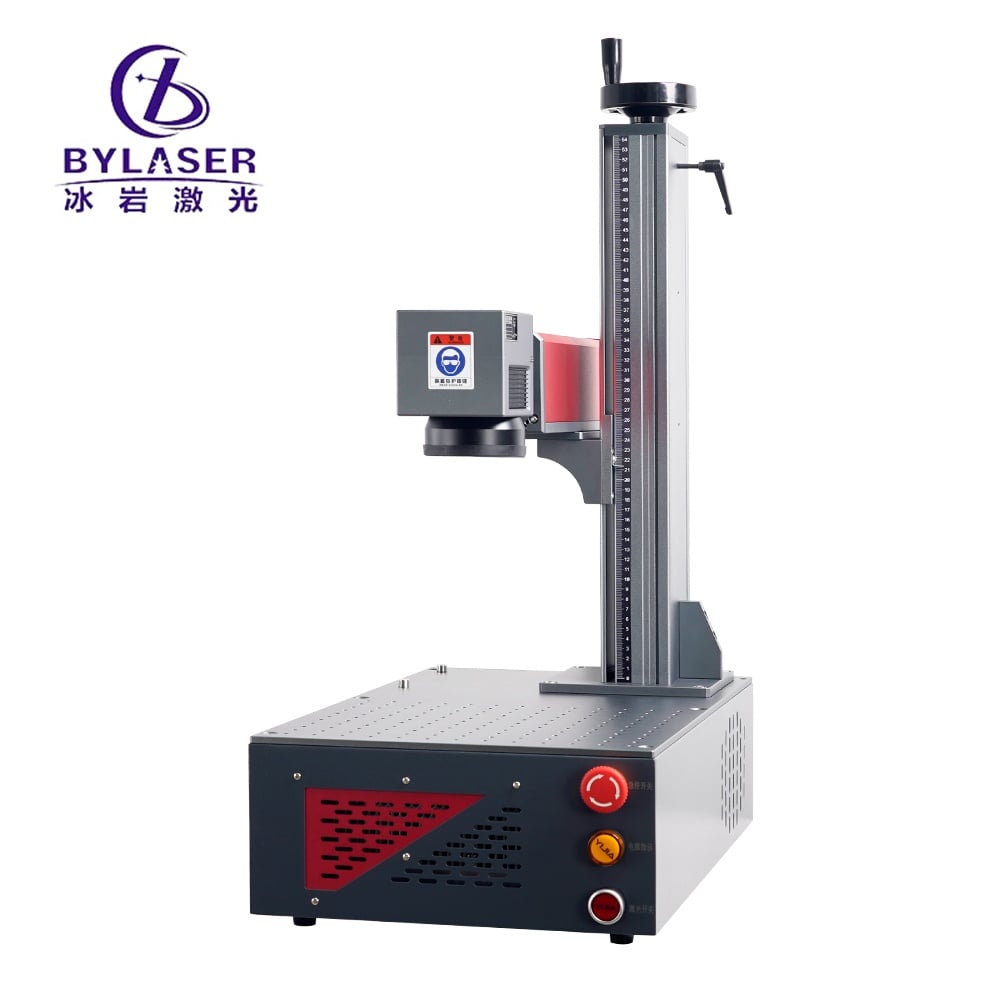
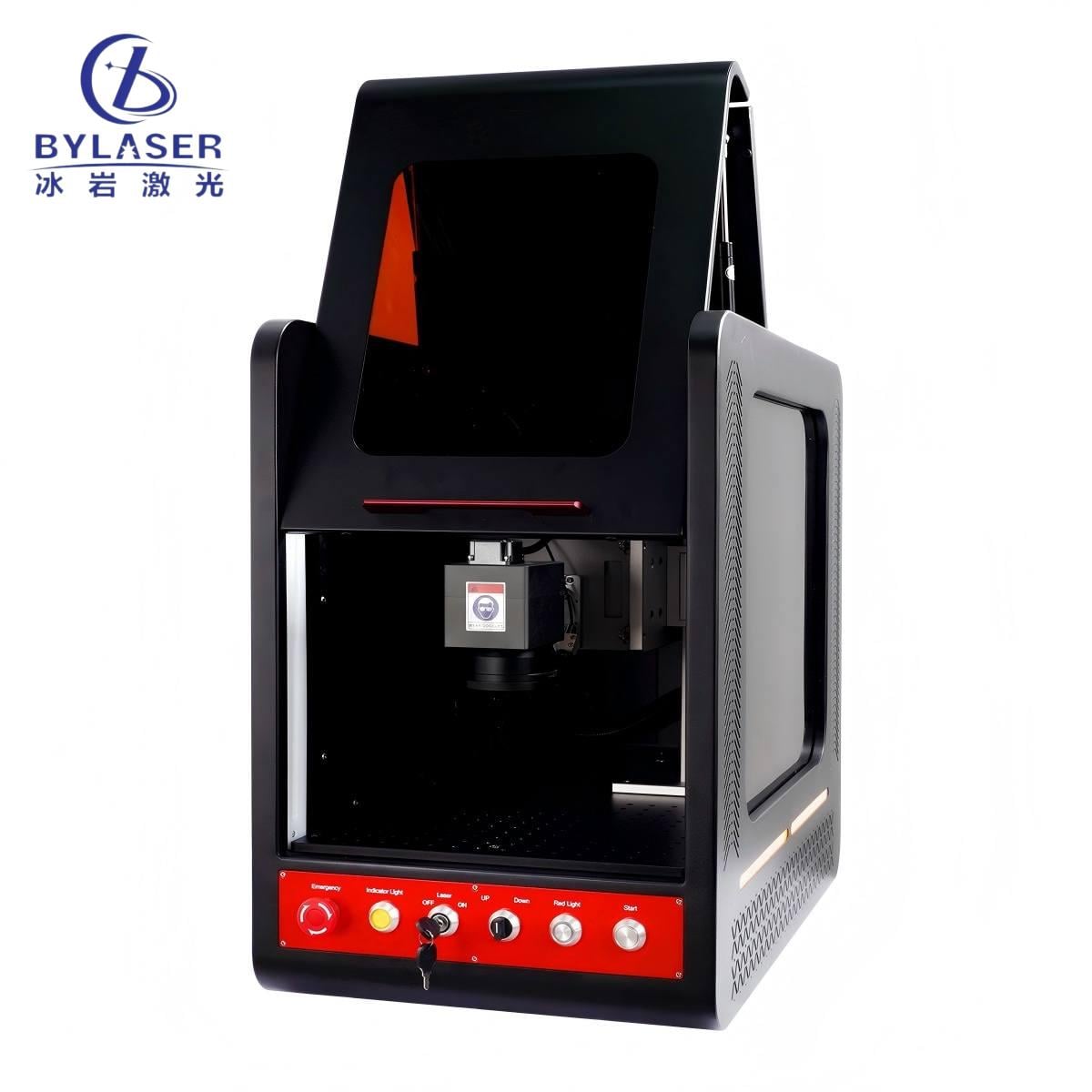
A fiber laser marking machine typically achieves positioning accuracy within 0.01 millimeters and can create readable characters as small as 0.3 millimeters in height, making them suitable for marking miniature electronic components, medical devices, and precision instruments. The beam spot diameter can be focused to approximately 20-50 microns, enabling creation of high-resolution two-dimensional barcodes and data matrix codes on surfaces measuring just a few square millimeters. This precision level supports applications requiring permanent identification on components where traditional marking methods would obscure product features or compromise dimensional accuracy.
Modern fiber laser marking systems maintain marking accuracy on curved surfaces through dynamic focus control and rotary axis integration that adjusts laser positioning in real-time as components rotate or move through the marking field. Advanced systems incorporate 3D scanning capabilities that map component surface geometry and automatically adjust focus distance throughout the marking process, ensuring consistent mark depth and contrast across complex three-dimensional shapes. This capability proves essential for applications including cylindrical connectors, curved medical instruments, and spherical aerospace components where maintaining consistent mark quality requires continuous focus adjustment during the marking cycle.
A fiber laser marking machine maintains accuracy through minimal maintenance compared to other laser technologies, primarily requiring periodic lens cleaning, beam path alignment verification, and calibration checks using standardized test patterns. The sealed fiber laser source eliminates consumable replacement and beam alignment procedures associated with traditional laser systems, while the solid-state design provides consistent output characteristics over typical service lives exceeding 100,000 operating hours. Regular maintenance protocols include verification of positioning accuracy using calibrated test fixtures, inspection of focusing optics for contamination or damage, and validation of mark quality using automated vision systems that ensure marking parameters remain within specification over time.
A fiber laser marking machine designed for production environments can mark components at rates exceeding 600 units per hour while maintaining micron-level positioning accuracy through integrated automation including robotic part loading, automatic fixture indexing, and real-time quality verification. High-speed galvanometer scanning systems enable rapid mark creation with positioning speeds exceeding 7000 millimeters per second, while digital process control ensures that every mark receives identical energy delivery regardless of production speed or environmental conditions. Manufacturers implement statistical process control monitoring that tracks mark quality metrics across entire production runs, triggering automatic parameter adjustments or alerts when marking characteristics drift outside specification limits to maintain consistent accuracy throughout high-volume manufacturing operations.