×
×
Selecting the right cleaning technology for an industrial application is rarely straightforward. Surface contamination comes in many forms — rust, paint, grease, oxide layers, coating residues — and each material and substrate demands a method that removes the unwanted layer without damaging what lies beneath. The laser cleaner machine has emerged as one of the most versatile and precise tools available for this challenge, but its suitability varies significantly depending on the application context. Understanding where it excels — and where it is the clear best fit — helps engineers, procurement managers, and operations teams make confident decisions.
A laser cleaner machine works by directing a focused, pulsed laser beam onto a contaminated surface. The energy is absorbed by the contaminant layer, which vaporizes or is ablated away, while the underlying substrate remains largely unaffected. This non-contact, chemical-free process makes it attractive across a wide range of industries. However, not every application benefits equally. Some scenarios align almost perfectly with what a laser cleaner machine does best, while others may require supplementary methods or a different approach entirely. This article examines the application categories where a laser cleaner machine delivers the most reliable, cost-effective, and technically sound results.
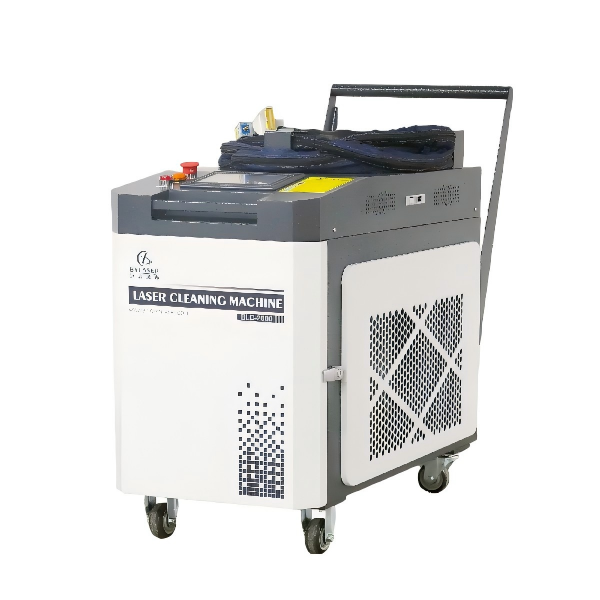
Rust and metal oxide layers are among the most common surface problems in manufacturing, maintenance, and fabrication environments. A laser cleaner machine is exceptionally well-suited to this task because the absorption characteristics of iron oxide and aluminum oxide differ significantly from those of the base metal beneath. The laser energy is preferentially absorbed by the oxide layer, causing it to ablate cleanly without penetrating deep into the substrate. This selectivity is difficult to achieve with abrasive blasting or chemical pickling, both of which can alter surface dimensions or introduce secondary contamination.
In structural steel fabrication, pre-weld rust removal is a critical step. Weld quality degrades sharply when rust or mill scale is present at the joint. A laser cleaner machine can prepare weld zones quickly and precisely, targeting only the area that needs to be clean without masking or protecting surrounding surfaces. This precision reduces preparation time and improves weld integrity in a single pass.
Post-weld oxide removal is equally important. Heat-affected zones develop discoloration and oxide films that can compromise corrosion resistance, particularly on stainless steel. A laser cleaner machine removes these heat tints without mechanical abrasion, preserving the passive layer that gives stainless steel its corrosion-resistant properties. This makes it a preferred tool in food processing equipment manufacturing, pharmaceutical machinery, and marine fabrication.
Many metal components in aerospace, automotive, and heavy equipment sectors have complex geometries — curved surfaces, recessed channels, threaded features, and tight tolerances. Traditional rust removal methods struggle with these shapes. Abrasive blasting can cause uneven material removal, and chemical treatments require careful containment. A laser cleaner machine, particularly a handheld pulse model, can be directed precisely along contours and into recessed areas, delivering consistent results regardless of surface geometry.
This geometric flexibility makes the laser cleaner machine especially valuable in maintenance and repair operations where components cannot be disassembled or submerged. Field technicians can treat localized rust spots on large structures — bridges, pipelines, offshore platforms — without shutting down adjacent systems or applying extensive masking. The result is faster turnaround and lower labor cost per treated area.
Paint stripping is one of the most demanding surface preparation tasks in industrial settings. Chemical strippers introduce hazardous waste streams and require strict handling protocols. Mechanical grinding risks removing base material and creating surface irregularities. A laser cleaner machine addresses both concerns by ablating the coating layer without generating liquid waste and without applying mechanical force to the substrate.
The process is particularly well-suited to applications where coating thickness varies or where only selective areas need to be stripped. In aerospace maintenance, for example, aircraft components often require partial paint removal for inspection or repair without stripping the entire surface. A laser cleaner machine can be programmed or manually guided to treat only the designated zone, leaving adjacent coatings intact. This level of control is difficult to replicate with any other method.
Automotive restoration and refinishing also benefit significantly. Stripping old paint from body panels, frames, and engine components without warping thin sheet metal or damaging underlying primers requires a gentle but effective approach. A laser cleaner machine operating at calibrated pulse parameters removes paint layers progressively, allowing the operator to stop at the desired depth. This is especially useful when restoring vintage vehicles where original surface profiles must be preserved.
Surface adhesion quality depends heavily on the cleanliness and profile of the substrate. When components are being recoated, bonded, or joined with adhesives, any residual paint, primer, or contamination layer will compromise bond strength. A laser cleaner machine produces a clean, micro-textured surface that promotes mechanical adhesion without introducing abrasive particles that could interfere with the bonding agent.
In wind turbine blade manufacturing and repair, adhesive bonding is a primary joining method. Surface preparation quality directly affects structural integrity over the blade's service life. A laser cleaner machine provides repeatable, documented surface cleanliness that supports quality assurance requirements and reduces the risk of delamination or bond failure in service.
Injection molds, die casting tools, and rubber vulcanization molds accumulate release agent residues, carbonized material, and surface deposits over production cycles. Traditional cleaning methods — sandblasting, dry ice blasting, chemical soaking — typically require the mold to be removed from the press, cooled, transported, and then reinstalled after cleaning. This downtime is costly in high-volume production environments.
A laser cleaner machine can clean molds in place, while they remain mounted in the press and at operating temperature. The laser beam is directed into the mold cavity, ablating residue from the surface without altering the mold's dimensional accuracy. Because no abrasive media is used, there is no risk of embedding particles in the mold surface or rounding off fine detail features. This is critical for molds producing precision optical components, medical devices, or consumer electronics housings where surface finish tolerances are tight.
The ability to clean in place reduces downtime from hours to minutes per cleaning cycle. Over a production year, this translates into significant capacity recovery and reduced maintenance labor. A laser cleaner machine in this context is not just a cleaning tool — it is a production efficiency asset.
Repeated abrasive cleaning gradually degrades mold surfaces, widening tolerances and reducing part quality over time. A laser cleaner machine removes contamination without removing base material, preserving the mold's original surface finish and dimensional accuracy across many more cleaning cycles. This extends the effective service life of expensive tooling and defers the capital cost of mold replacement.
For manufacturers operating large fleets of molds — common in automotive plastics, packaging, and consumer goods — the cumulative savings from extended mold life can be substantial. The laser cleaner machine becomes part of a preventive maintenance strategy rather than a reactive repair measure, shifting the maintenance model toward planned, low-impact interventions.
Conservation of historical artifacts, architectural stonework, and cultural heritage objects requires cleaning methods that remove surface soiling, biological growth, and environmental deposits without altering the original material. A laser cleaner machine is uniquely suited to this application because it applies no mechanical force and can be tuned to remove only the surface layer without penetrating into the substrate material.
Stone facades, bronze sculptures, marble reliefs, and terracotta surfaces all respond well to laser cleaning when parameters are correctly calibrated. The laser cleaner machine removes black crusts, biological films, and pollution deposits while leaving the original patina or surface texture intact. This level of selectivity is not achievable with water jetting, chemical poultices, or micro-abrasive methods, all of which carry a higher risk of surface alteration.
Museums, conservation studios, and architectural restoration firms have adopted the laser cleaner machine as a standard tool for high-value projects. The ability to work under magnification, treat small areas with millimeter precision, and document the process photographically makes it compatible with the rigorous standards of professional conservation practice.
Bronze and iron artifacts develop complex corrosion layers over time. Some of these layers — stable patinas — are considered part of the object's historical character and should be preserved. Others — active corrosion, harmful salts, or disfiguring deposits — need to be removed. A laser cleaner machine allows conservators to distinguish between these layers and treat them selectively, removing harmful deposits while leaving stable patina undisturbed.
This selectivity is possible because different materials absorb laser energy at different rates. An experienced operator using a laser cleaner machine can observe the surface response in real time and adjust parameters or stop treatment at the appropriate depth. No other cleaning method offers this combination of precision, reversibility, and real-time control.
In electronics manufacturing and precision engineering, surface cleanliness at the microscale directly affects product performance and reliability. Flux residues on circuit boards, oxide films on connector contacts, and adhesive residues on precision optical components all require removal methods that are gentle, dry, and leave no secondary contamination. A laser cleaner machine operating at low pulse energy and high frequency can address these requirements effectively.
The non-contact nature of the laser cleaner machine eliminates the risk of mechanical damage to fragile components. There is no solvent residue, no abrasive particle contamination, and no moisture introduction. For applications where cleanliness standards are defined at the molecular level — semiconductor packaging, optical lens manufacturing, medical implant production — this matters enormously.
Connector and contact cleaning is another high-value application. Oxidized or contaminated electrical contacts cause resistance increases, signal degradation, and intermittent failures. A laser cleaner machine can restore contact surfaces to a clean, conductive state without removing base plating or altering contact geometry. This is particularly useful in maintenance of high-reliability systems where connector replacement is expensive or logistically difficult.
Precision components destined for adhesive bonding, thin-film coating, or surface treatment require a substrate that is free of organic contamination, oxide films, and particulate matter. A laser cleaner machine provides this level of surface preparation reliably and repeatably. The process can be integrated into automated production lines, with the laser cleaner machine operating as a station in the assembly sequence rather than as a standalone offline process.
This integration capability is a significant advantage in high-volume precision manufacturing. The laser cleaner machine can be triggered by the production control system, treat each component for a defined duration, and pass it to the next station without manual handling. The result is consistent surface quality across large production volumes with minimal operator intervention.
Yes, a laser cleaner machine can be used on certain non-metal surfaces including stone, concrete, composite materials, and some ceramics. However, parameter selection is critical. Materials with low thermal conductivity or high sensitivity to heat require careful calibration to avoid surface damage. For organic materials like wood or certain plastics, the risk of thermal alteration is higher, and the laser cleaner machine may not be the most appropriate choice without thorough testing on representative samples first.
Both methods can clean molds in place without disassembly, but they differ in several important ways. Dry ice blasting requires a supply of CO2 pellets, generates a cold shock that can stress mold materials, and produces a waste stream of dislodged contamination that must be managed. A laser cleaner machine requires no consumables beyond electrical power, applies no thermal shock, and the ablated material is typically captured by a local extraction system. For molds with fine surface detail or tight tolerances, the laser cleaner machine generally offers better precision and lower risk of surface alteration.
A laser cleaner machine is most effective on surface contamination layers ranging from a few microns to several millimeters in thickness, depending on the material and the machine's power output. Light rust, thin oxide films, and single-layer paint coatings are removed efficiently in a single pass. Heavier rust scale or thick multi-layer coatings may require multiple passes or higher-power equipment. The key advantage is that the process is progressive and controllable — the operator can assess results after each pass and continue until the desired cleanliness level is achieved.
Operating a laser cleaner machine safely and effectively does require training, but the learning curve is manageable for technically competent personnel. Operators need to understand laser safety protocols, appropriate parameter settings for different materials, and how to interpret surface response during treatment. Most manufacturers provide application-specific guidance and training support. For high-value or sensitive applications — conservation work, precision electronics, aerospace components — more extensive training and process qualification are advisable before committing to production use.